
Views: 0 Author: Aisha Publish Time: 2025-10-22 Origin: Site
In industrial settings, efficiency and precision are everything. Whether it’s maintaining heavy-duty cutting tools, machinery blades, or production equipment, tool sharpness directly impacts performance and productivity. That’s where sharpening stones come in—and not just any stones, but industrial-grade options capable of handling the intensity of daily use.
As an employee of HUAYIDA, I’ve spent years working alongside engineers, factory operators, and maintenance professionals who rely on our diamond sharpening solutions to keep operations running smoothly. HUAYIDA has long been a trusted name in the sharpening tools industry, specializing in industrial diamond sharpening stones designed for demanding environments.

One question we often hear from clients is:
“Should we choose diamond or ceramic sharpening stones?”
It’s a valid concern—both materials have unique characteristics that affect sharpening speed, surface finish, and overall cost efficiency. In this article, I’ll compare diamond and ceramic sharpening stones, explain how HUAYIDA’s diamond technology is engineered for heavy-duty use, and help you determine which solution best fits your industrial sharpening needs.
Sharpening stones—also known as whetstones or honing stones—are abrasive tools used to restore a blade’s cutting edge. In industrial applications, they are essential for maintaining precision tools like cutting dies, machine blades, drills, and other metalworking instruments.
The performance of a sharpening stone depends on its abrasive material, grit size, bonding method, and hardness. Modern industries mainly use diamond and ceramic stones due to their durability and consistency, replacing traditional water and oil stones.
Both diamond and ceramic stones can produce sharp, accurate edges—but they operate very differently. Choosing the right material determines sharpening speed, tool longevity, and cost efficiency—critical factors in high-output manufacturing environments.

Diamond sharpening stones are created by bonding industrial-grade diamond particles onto a solid metal or resin base. Diamonds, being the hardest natural material on Earth, give these stones unmatched cutting performance.
At HUAYIDA, our industrial diamond sharpening stones are manufactured using precision electroplating and sintering technology. This ensures even diamond distribution, consistent grit exposure, and superior flatness retention. The result: rapid metal removal, stable performance, and long-lasting abrasive surfaces.
When using a diamond stone, the sharp diamond edges efficiently cut through metal without heavy pressure—ideal for high-carbon steels, tungsten carbide, and other tough alloys common in industrial tools. HUAYIDA diamond stones maintain their flatness over time, preventing uneven wear and ensuring repeatable results.
Diamond sharpening stones are the gold standard for industrial performance. Here’s why so many factories and workshops rely on them:
Unmatched Hardness: With a Mohs hardness of 10, diamonds can cut virtually any metal.
Faster Sharpening: Diamond abrasives remove material far quicker than ceramic or traditional stones.
Long-Term Flatness: HUAYIDA stones stay flat and consistent even after thousands of sharpening cycles.
Wide Versatility: Perfect for sharpening carbide-tipped saws, HSS tools, and industrial blades.
Low Maintenance: No soaking, no oiling, and no flattening required—ideal for production environments.
At HUAYIDA, every diamond stone is built for high-pressure industrial use. Our nickel-bonded surfaces enhance both diamond retention and corrosion resistance, ensuring top performance even under heat, vibration, and heavy workloads.
While diamond stones excel in most scenarios, there are a few considerations:
Higher Initial Cost: Diamond stones are more expensive to produce, but their lifespan offsets the investment.
Aggressiveness: Their fast-cutting action can remove too much material if used carelessly.
Not Ideal for Soft Metals: On softer materials like aluminum, diamond abrasives may cause micro-scratching.
That said, for industrial-scale sharpening of hard metals, nothing matches HUAYIDA’s diamond stones in efficiency, durability, and consistency.
Ceramic sharpening stones are typically made from aluminum oxide or zirconia, fired at high temperatures to form a dense abrasive surface. They aren’t as hard as diamonds but excel at providing a fine, polished finish.
In industrial settings, ceramics are often used for final finishing and edge refinement—the stage after major reshaping has been done by a diamond stone. They’re slower but deliver smoother, more controlled sharpening, making them useful for delicate tools or soft metals.
However, ceramics have drawbacks:
They are brittle and can crack if dropped.
They sharpen slowly, unsuitable for heavy re-edging.
They clog easily if not cleaned regularly.
In short, ceramic stones can complement a diamond system but cannot replace it for heavy-duty industrial sharpening. For reshaping, repairing, and maintaining hard tools, diamond stones are the professional standard.
At HUAYIDA, our mission is to deliver sharpening tools that combine speed, precision, and endurance. Our industrial diamond stone series—is engineered to handle continuous industrial use without performance degradation.
Advanced Material Engineering: Premium diamond abrasives electroplated for consistent performance.
Custom Grit Options: From coarse (200 grit) to ultra-fine (3000+ grit), suitable for reshaping to mirror polishing.
Exceptional Durability: Designed to resist warping and wear, maintaining perfect flatness.
Ergonomic Design: Anti-slip bases and user-friendly geometry for stable, safe operation.
Eco-Conscious Production: Manufactured using low-emission processes and recyclable materials.
Our clients across automotive, aerospace, and metal fabrication industries rely on HUAYIDA stones for their ability to reduce downtime, extend tool life, and deliver precise results every time.

| Feature | Diamond Stone (HUAYIDA) | Ceramic Stone |
|---|---|---|
| Material Hardness | 10 (Diamond – Mohs Scale) | 8–9 (Alumina/Zirconia) |
| Sharpening Speed | Very Fast (Ideal for reshaping) | Moderate (Ideal for finishing) |
| Surface Finish | Medium to Fine | Fine to Ultra-Fine |
| Durability | Extremely High | High but brittle |
| Maintenance Needs | Minimal | Moderate (requires cleaning) |
| Best Use | Hard steels, carbides, HSS tools | Precision finishing |
| Environment Suitability | Heavy-duty, high-volume use | Clean, low-impact settings |
| HUAYIDA Availability | ✔️ Available (D-Series, DX-Pro, HD-Diamond) | ❌ Not manufactured by HUAYIDA |
While HUAYIDA does not produce ceramic stones, we often advise clients to use them in conjunction with diamond stones if fine finishing is required. However, for industrial reshaping, maintenance, and mass production sharpening, HUAYIDA diamond stones remain the superior and more cost-effective choice.
When selecting a diamond sharpening stone for your operation, consider three key factors:
Tool Material: For hard steels, tungsten carbide, or HSS tools, choose coarse to medium HUAYIDA diamond grits.
Sharpening Frequency: For frequent or automated sharpening, opt for HUAYIDA’s HD-Diamond Series, built for continuous industrial use.
Working Environment: HUAYIDA stones perform exceptionally well in dusty, humid, and high-temperature workshops.
Many professionals adopt a two-step sharpening system—starting with a coarse HUAYIDA diamond plate for edge repair, then moving to a finer HUAYIDA grit for polishing. This approach ensures speed, accuracy, and superior tool longevity.
While diamond stones have a higher upfront cost, their long service life and time efficiency make them the smarter long-term investment.
| Aspect | HUAYIDA Diamond Stones |
|---|---|
| Initial Cost | Higher |
| Lifespan | 5–10 years (industrial use) |
| Maintenance | Very Low |
| Sharpening Speed | Extremely High |
| ROI | Excellent |
| Best Use | Continuous heavy-duty sharpening |
A single HUAYIDA diamond stone can replace multiple traditional stones, cutting maintenance time and cost significantly.
Clean Regularly: Rinse after each use to remove metal debris.
Avoid Excess Pressure: Let the diamonds do the work—gentle strokes yield consistent edges.
Lubricate When Needed: A few drops of water or oil reduce heat during long sessions.
Match Grit to Task:
200–400 grit: Reprofiling and reshaping
800–1500 grit: General sharpening
3000+ grit: Fine polishing
Safety First: Use stable surfaces and protective gloves; HUAYIDA stones include anti-slip designs for secure use.
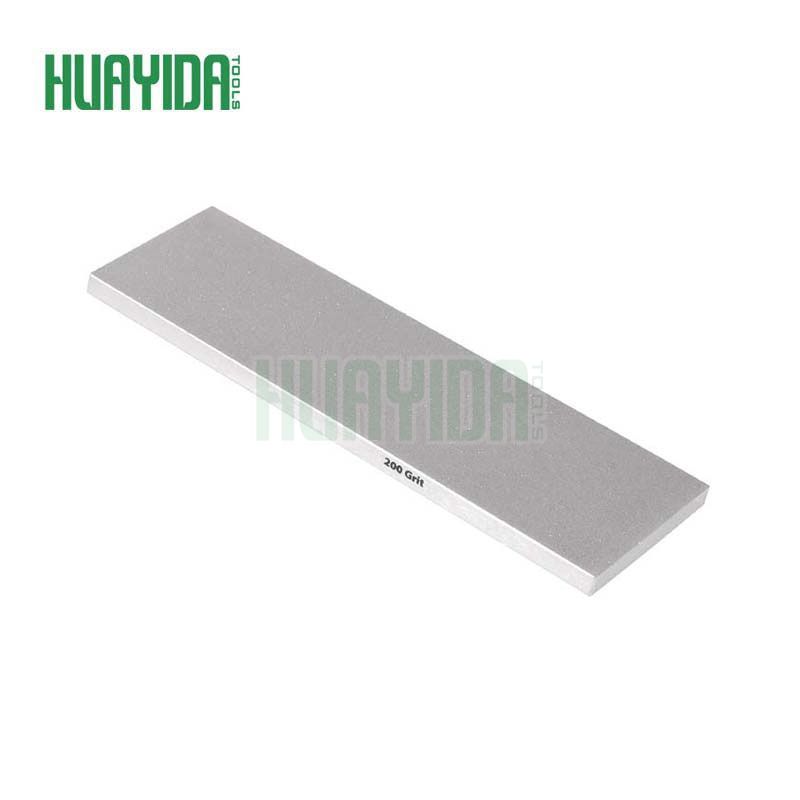
200 grit flat diamond sharpening stone

Double-sided diamond sharpening stone 400/1200 grit
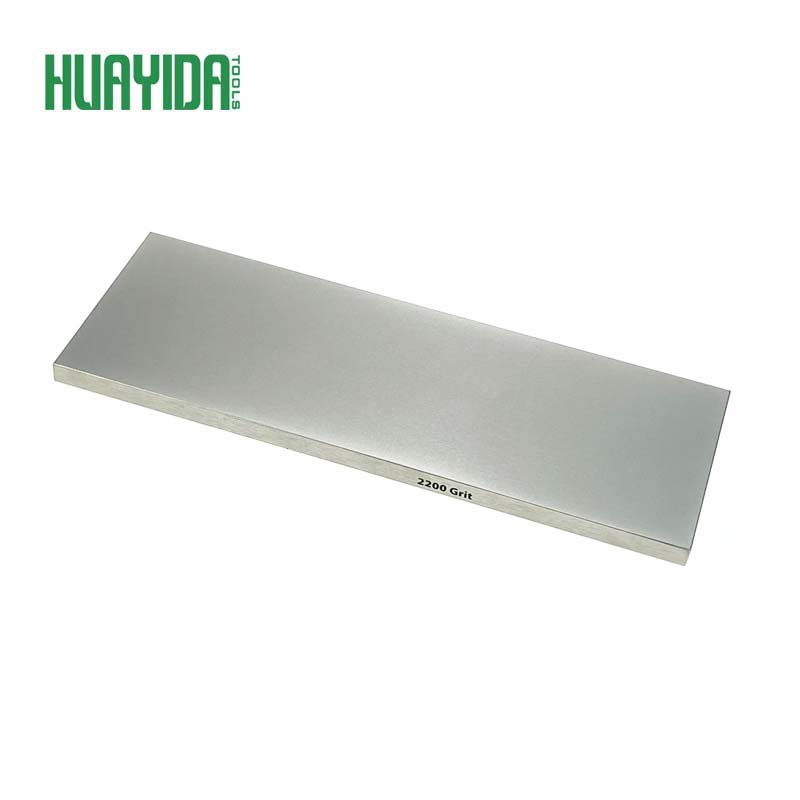
2200 grit diamond wet stone

3000 grit diamond blade sharpening stone
A metal fabrication plant in Shenzhen approached HUAYIDA seeking faster blade maintenance. Using traditional stones, their team spent 12 hours weekly sharpening tools with inconsistent results.
After switching to HUAYIDA’s HD-Diamond Series, the impact was immediate:
| Metric | Before HUAYIDA | After HUAYIDA |
|---|---|---|
| Sharpening Time per Blade | 25 minutes | 8 minutes |
| Edge Consistency | 72% | 96% |
| Tool Lifespan | – | +45% |
| Maintenance Labor/Week | 12 hours | 4 hours |
The plant reported saving over $8,000 annually in tool and labor costs—proof of HUAYIDA’s industrial sharpening efficiency.

When it comes to heavy-duty industrial sharpening, diamond stones are unmatched. They deliver faster results, longer life, and superior precision—making them the go-to choice for professionals working with hard materials and demanding production schedules.
While ceramic stones have their place in fine finishing, HUAYIDA’s diamond sharpening stones provide the performance, durability, and value needed for real-world industrial challenges.
At HUAYIDA, our mission is clear:
To help industries work sharper, faster, and smarter—with diamond technology built to last.

1. Does HUAYIDA manufacture ceramic sharpening stones?
No. HUAYIDA specializes exclusively in diamond sharpening stones for industrial use.
2. How long do HUAYIDA diamond stones last?
With proper care, typically 5–10 years, even under daily use.
3. Can HUAYIDA stones sharpen tungsten carbide or HSS?
Absolutely. Our diamond abrasives are engineered for hard alloys and high-speed steels.
4. Do they require lubrication?
Not necessarily, but light water or oil can improve performance during prolonged sessions.
5. Are HUAYIDA diamond stones suitable for automated sharpening systems?
Yes. Our D-Series and HD-Diamond models integrate seamlessly with semi-automatic and robotic systems.


